Best Buy | Sales Event
Best Buy sales events are high-pressure weeks where millions of customers arrive with urgency, purpose, and very little time. These moments drive a significant portion of annual revenue and shape how customers trust the brand.
Senior UX Designer
UX Design Partners
Product Managers
Researchers
Digital Content Team
Engineers
2024 - 2025
Challenge
Despite the volume and importance of these sales events, the experience was fragmented. Deals were buried in long, unstructured grids, making customers hunt for value. Internally, teams rebuilt this same pattern year after year. This led to missed opportunities and measurable revenue risk.
Results
The redesigned event introduced a clearer visual hierarchy, modular storytelling, and more adaptive layouts. Customers located relevant deals faster, merchandising gained more flexibility, and the experience performed better across both mobile and desktop.
Key outcomes:
• 14 bps increase in conversion (worth $4M to $7M annually)
• 31 bps lift in mobile view engagement (about $10M in influenced revenue)
• Higher interaction with priority modules such as SKUs and featured stories
+14 bps
Conversion lift
+31 bps
Mobile engagement
+10 - 15%
Module interaction
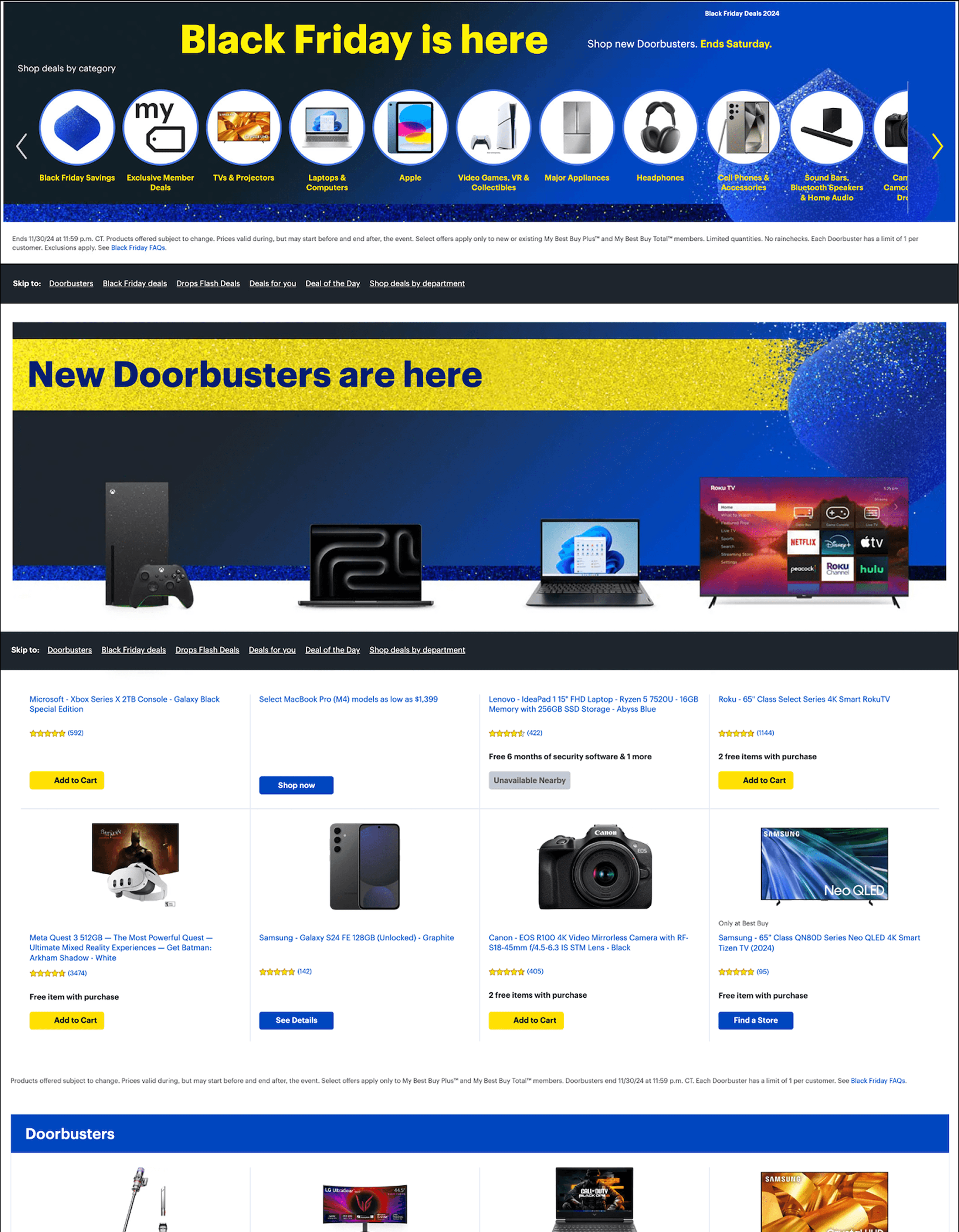
Before
Disjointed modules, outdated UI, unclear hierarchy, heavy scroll fatigue.
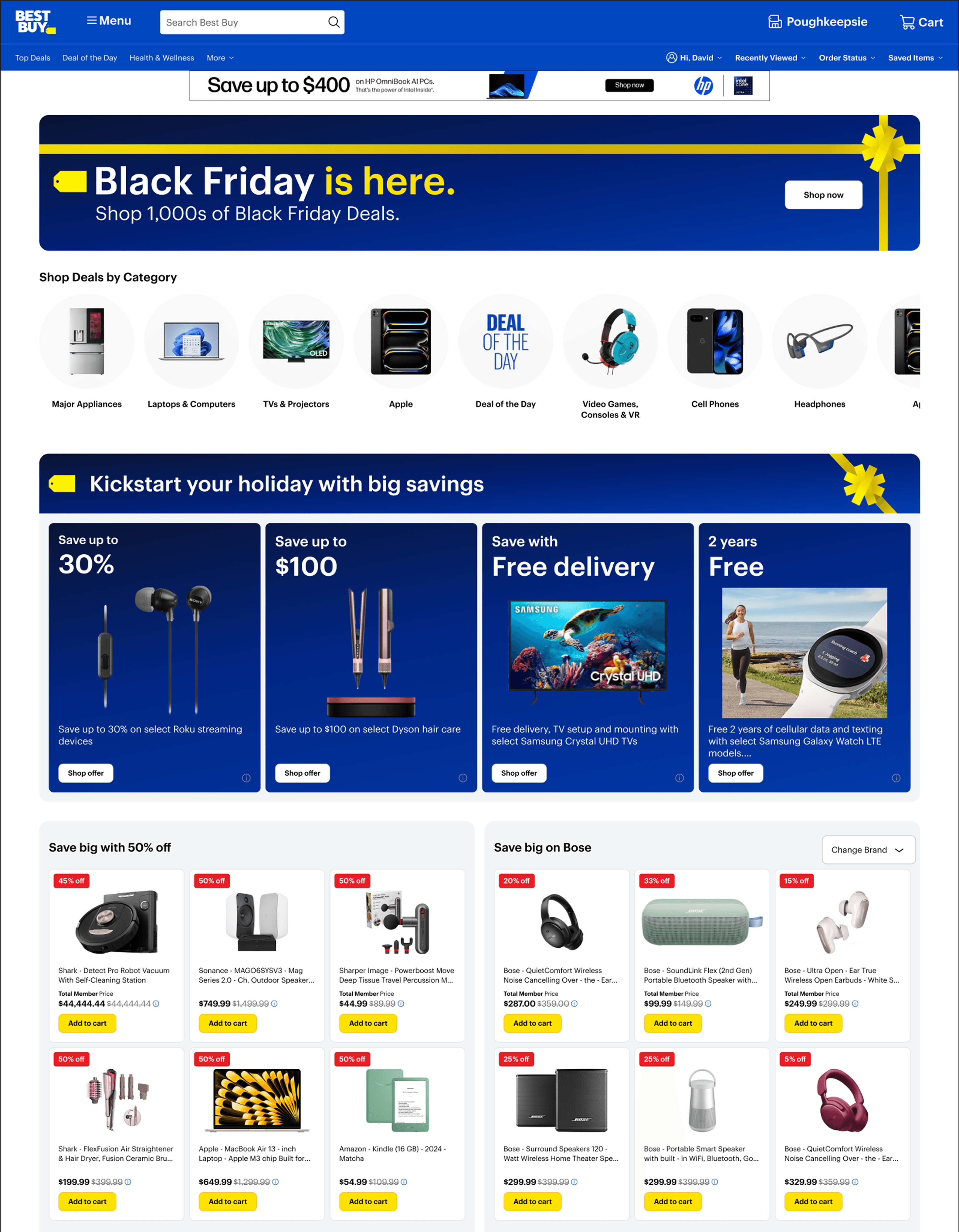
After
Stronger storytelling, cleaner components, simplified event structure, clearer price/value cues, better merchandising flexibility.
Process
Research & Alignment: Reviewed analytics, explored historical event performance, and worked with our product partners, Digital Content Team (DCT), and Standards team to understand pain points. Identified where users dropped off, what modules under-performed, and what content teams needed to highlight. We also worked closely with the Brand team to align on visual designs for the upcoming season.
Experience Mapping: Mapped the full event flow across desktop (large view), mobile web (small view), and the app. Identified inconsistencies, duplicate modules, and areas where hierarchy broke down. Created a unified structure that works across all screens.
Design & Prototyping: Redesigned the hero, SKU modules, story banners, timers, and offer cards. Built a responsive modular system that allowed events to scale without messy one-offs. Created clickable prototypes to validate layout and readability.
Cross-team Collaboration: Worked closely with the Digital Content Team, Standards, and Engineering to ensure feasibility. Ran weekly design reviews with Product Managers and UX Managers. Adjusted components based on constraints and opportunities.
Implementation for Techtober and Black Friday: Supported engineering through launch. Shipped adaptable modules, refined states for mobile web (small view), optimized story layouts, and ensured content scaled across the event lifecycle.

Conclusion
The new Sales Event experience became more intuitive, visually structured, and easier for shoppers to navigate. Deal stories were clearer, merchandising gained more control, and the event framework now scales across key retail moments like Techtober, Early Holiday Deals, and Black Friday. The redesign helped deliver measurable revenue lifts and created a more flexible foundation for future event work.
Future Opportunities
While this redesign created a more intuitive and scalable foundation, there’s still meaningful opportunity to evolve the Sales Event experience further. My long-term vision is to transform the page from a static promotional surface into a smarter, adaptive shopping experience. This includes deeper personalization so event content dynamically adjusts to shopper intent, browsing history, past purchases, and engagement patterns.
I see potential in expanding modular intelligence, tailoring layouts based on customer behavior, surfacing context-aware deals, improving discoverability with predictive recommendations, and refining how relevance is prioritized across categories. Ultimately, the goal is to evolve Sales Events into a living experience that continually adapts to each customer, reduces friction, and drives stronger business impact through more meaningful shopping moments.